From now through March 17th, you can get free U.S. shipping at Lulus.com! No code, no minimum purchase. If I had to choose one thing, it would be these jelly pearl sandals—just $18 and they look so much like this Steve Madden pair that costs $49!
JavaScript is currently disabled in this browser. Reactivate it to view this content.
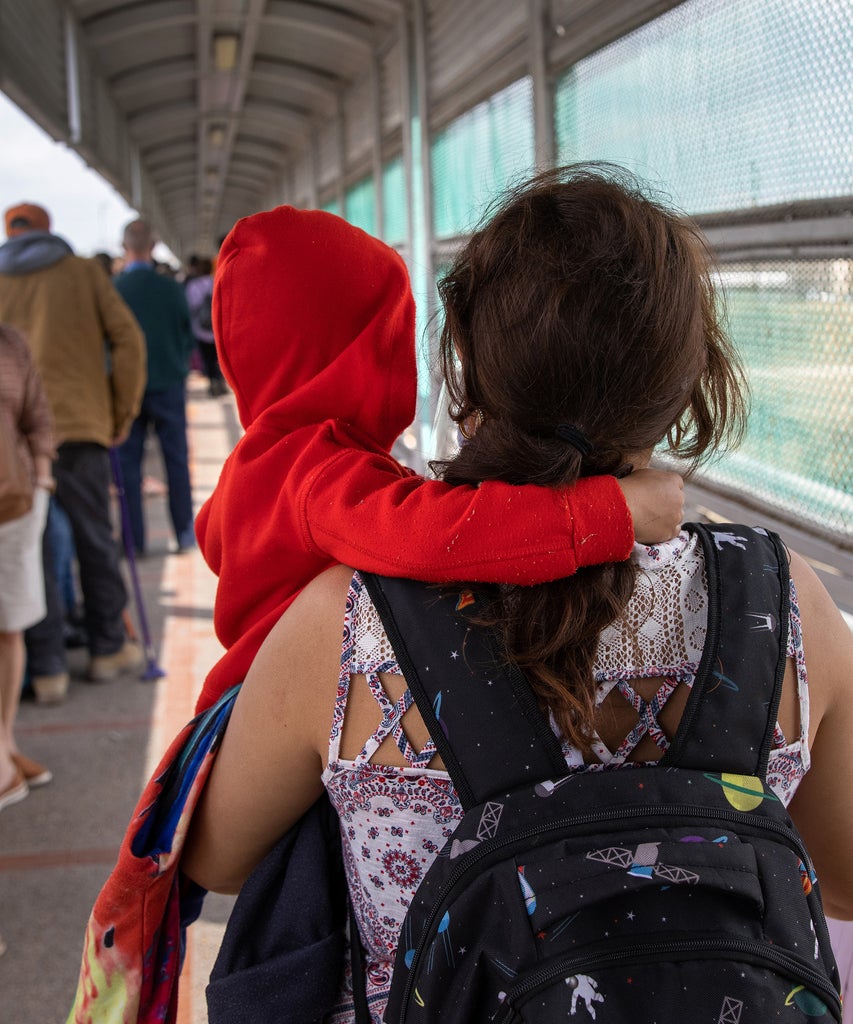
The ongoing crisis at the southern border of the United States is intensifying, as CNN reports more than 4,000 migrant children are being held in Border Patrol Custody. This highlights a continued influx of children housed in border facilities — on March 10, more than 3,700 unaccompanied migrant children were being detained by Border Patrol. The increase has put an already strained system in disarray as officials work to find safe housing accommodations in the midst of the ongoing COVID-19 pandemic, leaving many children in what CNN describes as “jail-like facilities” for extended periods of time.
But what is perhaps more jarring is the decision to continue to detain migrant children in the first place. Although President Joe Biden ran on the promise that he would undo many of the previous administration’s inhumane immigration policies, he has come under some scrutiny for his handling of the U.S. border.
Since taking office, Biden has restored the Deferred Action for Childhood Arrivals (DACA) program, created a task force to reunite the migrant families forcibly separated as a result of President Donald Trump’s “zero tolerance” policy, and ordered a review of asylum processing at the U.S.-Mexico border. However, Biden’s immigration-related executive orders did not include a repeal of Title 42, which allowed authorities to “expel almost all people caught crossing the border illegally” under the guise of slowing the spread of COVID-19. Currently, authorities are still expelling all children who arrive with their parents at the border under these pandemic-related restrictions.
And less than three months into the Biden-Harris administration, a facility for migrant children reopened in Carrizo Springs, TX — a center known as the “Cadillac of migrant children centers” that first opened under the Trump administration. The Biden administration also plans to reopen a for-profit detention center in Homestead, FL, according to a report from The Miami Herald. In 2019, the same center came under fire after reports of sexual abuse, overcrowding, and failing to properly vet staff for prior child abuse records surfaced.
The Biden administration has continuously argued that they have no choice but to reopen these facilities due to the influx of unaccompanied migrant children arriving at the border. “What we are doing is working as quickly as possible to process these kids into these HHS facilities,” White House press secretary Jen Psaki said during a Feb. 24 press briefing. “This is a difficult situation. It’s a difficult choice.” During an interview with Univision, President Biden said: “Our hope and expectation is that won’t stay open very long, that we will be able to provide for every kid that comes across the border to safely be housed in a facility that is licensed,” referring to the Carrizo Springs facility.
Still, advocates — and some representatives within the Democratic party — argue that the issue isn’t the size of the cage, but the fact that children are being put in cages at all. “This is not okay, never has been okay, never will be okay — no matter the administration or party,” Rep. Alexandria Ocasio-Cortez tweeted on Feb. 23. “Our immigration system is built on a carceral framework. It’s no accident that challenging how we approach both of these issues are considered ‘controversial’ stances. They require reimagining our relationship to each other and challenging common assumptions we take for granted.”
Studies have long shown the mental health ramifications of housing migrant children in these detention facilities. Twenty-six studies found that adults and children alike experienced “high levels of mental health problems” as a result of detention, and that “anxiety, depression, and post-traumatic stress disorder were most commonly reported both during and following detention,” according to a 2009 review published in BMC Psychiatry. The same review found that the longer children, adolescents, and adults spend in a detention center, the more likely it is that they will experience severe mental health effects.
“To create a just and dignified immigration system, we have to abandon cruelty as a deterrent or we’re not going to get very far,” Jacinta Gonzalez of Mijente, an advocacy organization, told Newsweek back in February. “We need a commitment from this administration that they’re moving away from the rhetoric and policies that are so harmful.”
Like what you see? How about some more R29 goodness, right here?
In July 2020, a mother of a Victory Vipers cheerleader in Bucks County, PA approached police with a disturbing report: Someone was harassing her teenage daughter and sending doctored images of the underage girl to make it appear as if she was naked, vaping, and drinking. Shortly after, two more families came forward with similar stories: Their daughters, all members of the same cheerleading squad, were being targeted by an unknown person with doctored photos and videos.
But it was the eventual suspect that caused concern and confusion among the three girls’ families. On March 4, authorities arrested who they believe to be the person behind the coordinated harassment campaign. Raffaela Spone, 50, allegedly harassed members of her own daughter’s cheerleading squad for months. Spone, who now faces three misdemeanor counts of cyber harassment of a child, among other related offenses, allegedly began targeting the girls after they had a reported “falling out” with her daughter.
In addition to harassing those three members of the Vipers cheerleading squad for months, Spone is being accused of lifting photos from their social media accounts and altering them to make it look like the girls were drinking and vaping, sometimes while naked or while wearing bikinis.
In one instance, the Spone allegedly urged a 17-year-old girl to kill herself. “I do get hate comments — nothing to this extreme, but I was really upset,” the girl told a local ABC affiliate. “I was like, ‘Who says this to someone? Who thinks it’s OK?’ It made me more mad than upset.”
Spone is said to have sent doctored videos and pictures of the girls to the cheerleading squad’s coaches and gym owners. The intent, per an affidavit of probable cause, was to get the girls kicked off the squad — a known consequence for vaping or drinking while underage. Spone also allegedly sent text messages and made phone calls to the gym from multiple phone numbers, according to authorities.
“I felt like if I said to someone… I… like… no one, no one would trust me. They had the video on proof, even though the video wasn’t real,” Madi Hime, a Victor Vipers cheerleader, told the TODAY Show. “I didn’t know how to protect her from that. I didn’t know who to protect her from. There were a lot of sleepless nights,” Madi’s mother added.
So, how exactly did Raffaela Spone finally get caught in her cheer tower of lies? Police were able to track an IP address and phone numbers back to Spone’s home, and allege she used her smartphone to send messages, doctored photos, and deepfake videos via an app that enabled her to hide her number. “We’ve always taken for granted that a photo is a photo, a video is a video,” Bucks Country District Attorney Matt Weintraub told TODAY. “We can’t take that for granted anymore.”
There is no indication that Spone’s daughter was aware of her mother’s actions, and Weintraub said “the daughter is completely blameless in this” during a Monday news conference. Spone herself has denied the allegations and the charges, and her lawyer told TODAY: “We are going to aggressively fight this.”
In a statement obtained by TODAY, the Victory Vipers said, in part, that their “group has always promoted a family environment and we are sorry for all individuals involved.”
Like what you see? How about some more R29 goodness, right here?
Mainstream Latinidad has always felt alien to me. For one, I found it always seemed like it was concerned with explaining itself to white people while also distancing itself from Black people. What’s more, I could never see myself in the forced dialogue of Latinx-centered shows. To be honest, I still can’t find myself in the exploited mija and the strategically placed Bustelo cans in shows that are dique pa’ la gente. It feels like the worst kind of hand-me-down: gifted, cheap and ill-fitting; and as with most “gifts,” I’m supposed to say thank you.
As I watched this year’s Oscars nominations be announced, the nods were surprisingly not abominable with at least nine historic firsts. However, people were quick to comment on the lack of Latinx representation. While true, one significant moment remained disregarded: Shaka King, director and co-screenwriter of Judas and the Black Messiah, was nominated for Best Picture and Best Original Screenplay. King is of Panamanian descent, but as history shows, Latinx folks and Hollywood will not see this as a Latinx win, and in this denial, will continue to negate the presence and nuance of Blackness in Latinidad.
I really hope Latinos celebrate Shaka King’s Oscar nominations but hope what we take away is recognizing the neglect Afro-Latinos encounter and realize our knee jerk reaction of “what about me/us?” comes from a place colonial trauma and becomes toxic af when left unaddressed.
Mainstream Latinidad has managed to render the Afro-Latinx identity nearly invisible. There’s no denying that when it comes to Latinx-centered stories, Hollywood graduated from the elementary narratives of drug-lords and unscripted maids and janitors to more dynamic stories that explores family, gender, sexuality, and class — but, unsurprisingly, not race.
Afro-Latinx stars like Sarunas Jackson Jr. (Afro-Panamanian), Tessa Thompson (Afro-Panamanian and Mexican), Lupita Nyong’O (Kenyan-Mexican), and Jharrel Jerome (Dominican), are never seen as Latinx. Their roles are nearly all devoid of ethnicity or nuanced heritage, which sends a message that any Black person on a screen is African-American by default — an assumption that perpetuates the Afro-Latinidad erasure and sustains the stereotype of the Black monolith. While white Latinx actors are freed by their race, and Mestizx actors are freed by the “absence” of Blackness thereof, Black Latinx actors and actresses are confined to it.
If not for the mirrors in my house, the telenovelas I grew up watching would’ve convinced me that I didn’t exist. For decades, the most popular Spanish-language networks advanced the myth of a raceless Latinx population through predominantly white telenovela stars — a myth that gave birth to the quintessential Latinx identity in modern American film and TV. While this white-washing is the standard in Latin American cultures, it’s unsettling in a different way here in the U.S. Unlike in Latin America, where white Latinx and Mestizx actors dominate film and TV as an extension of their position of power and privilege in society, in the United States, non-Black Latinx actors represent marginalized people and are the “diverse” additive in a overwhelmingly white industry – even though they, too, are white. In other words, when Hollywood asks for a “diversity hire,” white Latinx actors are the go-to — they are beneficiaries and, somehow, victims of the white supremacy that has been upheld in their favor. White Latinx folks are convenient; they placate the consciousness of the film and TV industry when it finds itself cornered by demands of diversity, without sacrificing whiteness. White Latinx folks don’t disrupt the palette.
The chameleon nature of whiteness gives white Latinx actors like Anya Taylor-Joy — who is of Argentine descent — the freedom to play Emma in the film adaptation of Jane Austen’s celebrated novel and win the Emmy for Best Actress in a Limited TV Series for her portrayal of Beth Harmon in The Queen’s Gambit. That’s not to say she didn’t deserve the roles or the accolades that followed, but it’s important to acknowledge the privilege of being able to portray two white female characters of differing non-Latinx ethnicities and then be heralded by Variety magazine as the “first woman of color” to win in an Emmy category (Taylor-Joy herself told Vulture in 2018 that she identifies as white). It should also be noted that when Afro-Latinx actors do win, like in 2019 when Jharrel Jerome won the Emmy for Best Lead Actor in a Limited Series for his work on When They See Us, white Latinx audiences didn’t celebrate it as a win of their own. In fact, John Leguizamo — who was also in When They See Us — went on to criticize the award show for its lack of Latinx representation (he was subsequently called out for not seeing Jerome’s nomination and subsequent win as a Latinx win).
Evidently, white Latinidad isn’t interested in diverse, inclusive representation in Hollywood. Instead, it’s interested in being afforded the exclusive, chameleon liberties of whiteness — at the expense of non-white Latinx people.
It doesn’t just come down to casting. Diverse Latinx representation needs to exist behind the scenes for there to be effective change. If Afro-Latinx people are not present in writer’s rooms and storytelling is left to non-Black Latinx writers, the same tired stories will continue to be told. Showrunners, studio heads, producers, and directors are in charge of hiring staff writers, casting directors, and greenlighting diverse casts and nuanced scripts; as such, diverse Latinx representation must exist at this level as well.
The new class of Hollywood “changemakers” include Latinx celebrities who are pushing for change, but they are the same Latinx stars who have been granted access into Hollywood because of their proximity to whiteness. Many of them have internalized anti-Black rhetoric that propagates in Latinx communities. There are Latinx-centered luncheons, writers rooms, and initiatives with the same white and racially ambiguous faces at the center of them. The fight for diversity and inclusion cannot solely be championed by people who continue to benefit from their proximity to whiteness and self-professed distance from Blackness. What does diversity even look like to white people whose ethnicity and ambiguity affords them the ability to fluctuate between the standard and the marginalized?
“What does diversity even look like to white people whose ethnicity and ambiguity affords them the ability to fluctuate between the standard and the marginalized?”
The task of authentic Latinx representation is being placed in the hands of both white Latinx people who seek to center themselves in the U.S. media the way that they have in Latin America, and the non-Latinx white executives who want to make Latinidad palatable for a white audience. Yes, Latinx people are making strides in the fight for more humane and nuanced representation of Latinidad, but at the expense of an already marginalized group of people both in the U.S and Latin America.
The Latinx market is often described as a niche market in Hollywood. In truth, it is anything but — it is sprawling and diverse, white and non-white, and encompasses a spectrum of experiences. If nuanced representation means allowing Latinidad to be the prism through which we explore intersections of gender, class, ethnicity, and sexuality, then authentic representation means looking at all the ways gender, class, ethnicity, and sexuality intersect with race.
Networks and streaming platforms say they want to represent the Latinx experience but so long as the want for whiteness eclipses the need for authenticity, at the expense of Afro-Latinx people, the output will pale in comparison to the real thing.
Like what you see? How about some more R29 goodness, right here?
Mandatory Credit: Photo by ALESSANDRO DI MEO/EPA-EFE/Shutterstock (11789205ae) Pope Francis visits the Church of ‘immaculate Conception’ Qaraqosh, Iraq, 07 March 2021. Pope Francis began on 05 March a three-day official visit in Iraq, the first papal visit to this country affected throughout the years by war, insecurity and lately COVID-19 Coronavirus pandemic. Pope Francis first visit to Iraq, Mosul – 07 Mar 2021
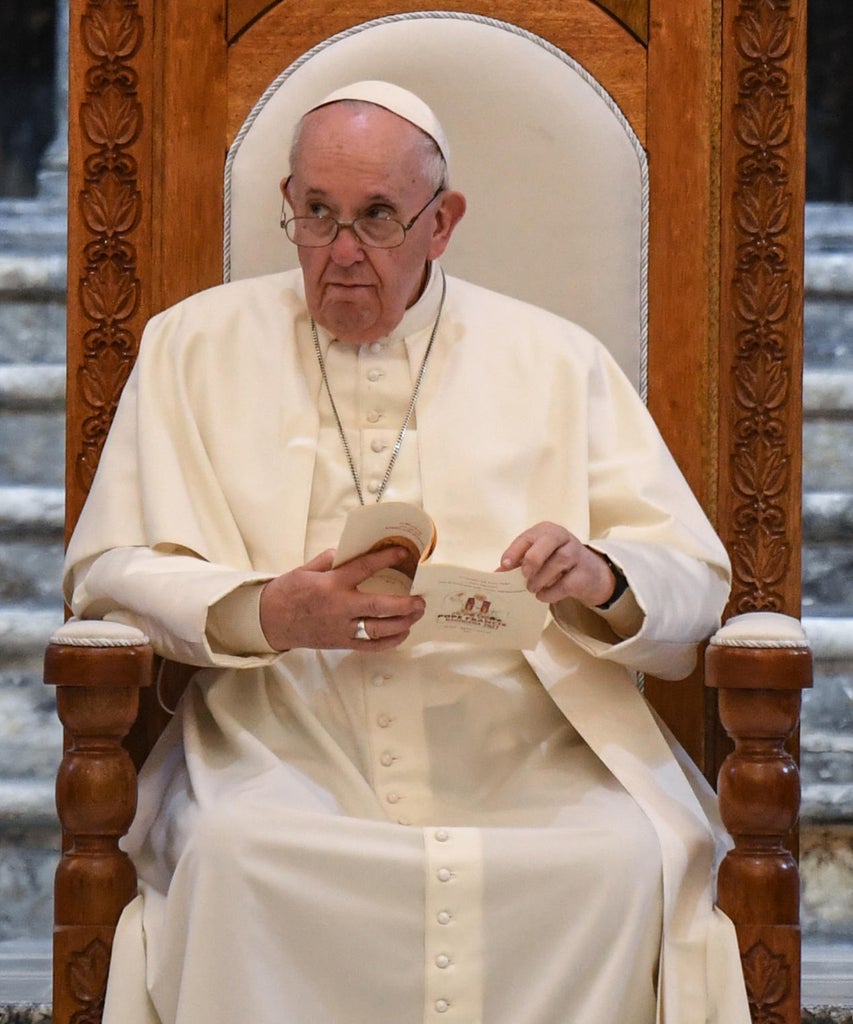
On Monday morning, the Vatican’s orthodoxy office kicked off the week by issuing a formal response to the question of whether or not the Catholic Church could and should bless gay unions. The response, which was approved by Pope Francis, said that while gay people should be treated with respect, God “does not and cannot bless sin: He blesses sinful man, so that he may recognize that he is part of his plan to love and allow himself to be changed by him.” The notice went on to say that gay sex is “intrinsically disordered” and that the “presence in such relationships of positive elements, which are in themselves to be valued and appreciated, cannot justify these relationships and render them legitimate objects of an ecclesial blessing.”
The comments from the Vatican feel like a step backward after Pope Francis made affirming comments about gay unions in October of last year during a documentary interview. “Homosexual people have a right to be in a family,” he said in the film. “They are children of God and have a right to a family. Nobody should be thrown out or made miserable over it. What we have to create is a civil union law. That way they are legally covered.”
Then again, this is the Catholic Church we’re talking about. And even the Pope’s seemingly positive comments about the existence, rights, and happiness of LGBTQ+ people were nowhere near progressive or, more importantly, indicative of the Catholic Church’s stance.
It’s also ironic and, at best, wildly hypocritical that a religious institution that has known about clergy members engaging in child rape and pedophilia since at least the 1950s — one that sent abusive clergy members to Church-run medical centers so they could “receive treatment” without alerting medical professionals of their crimes — would continue to deny LGBTQ+ Catholics a blessed marriage.
In 2018, a grand jury investigation revealed that over 300 priests in Pennsylvania abused over 1,000 children. Just last year, Pope Francis urged the leader of the Catholic church in England and Wales, Cardinal Vincent Nichols, to stay in his post and not resign after a report concluded that his leadership repeatedly “prioritized its reputation over the welfare of child sex abuse victims.”
That same year, the Pope said homosexuality in the clergy was a “serious matter” that “worried” him, going on to say that “the Church urges that persons with this rooted tendency not to be accepted into ministry or consecrated life.”
Many in the Catholic right have attempted to link the horrific sex abuse scandal of 2002 to the existence of LGBTQ+ people. As Intelligencer writer Andrew Sullivan wrote in a 2019 piece, these people claim that “the root of the scandal was not abuse of power, or pedophilia, or clericalism, or the distortive psychological effects of celibacy and institutional homophobia, but gayness itself.”
Like what you see? How about some more R29 goodness, right here?
Welcome toMoney Diarieswhere we are tackling the ever-present taboo that is money. We’re asking real people how they spend their hard-earned money during a seven-day period — and we’re tracking every last dollar.
Do your regularly consume marijuana? Do you factor your cannabis purchases into your budget? We want to hear from you! Send us an email at moneydiary@refinery29.com with the subject line “4/20 Money Diary” and a bit about yourself for a chance to participate in an upcoming Money Diaries project. Underrepresented voices will be prioritized.
Today: a vegetable farmer who makes $17,000 per year and spends some of her money this week on a tractor.
Occupation: Vegetable Farmer Industry: Agriculture Age: 33 Location: Sonoma County, CA Salary: $17,000 Net Worth: ~$2.5 million ($1.33 million trust, $865,000 my half of the farm property, no mortgage, $300,000 savings/checking accounts (less by the end of the week), $46,000 in farm business account (as of this week)) Debt: $0 Paycheck Amount (2x/month): $662 Pronouns: She/her
Monthly Expenses Housing: $8,500/year for my half of the property taxes Cell Phone: $124 (I pay for the family plan that includes my mom and sister) Car Insurance: $129.90 (I pay the insurance for my car and our farm truck) Gas/Electric: My sister pays Internet: $65 Farm Insurance: $3,749/year HBO: $12 Netflix: $0 (I use my mom’s) NYTimes: $15 Donations: $200 (because the money I’ve inherited is in a chunk rather than large monthly income, I like to give in bigger chunks as specific projects/causes come up, but I’ve set up $200/month for the work I want to support consistently)
Was there an expectation for you to attend higher education? Did you participate in any form of higher education? If yes, how did you pay for it?
Absolutely, I don’t feel like the option of even taking a gap year, let alone not attending college, was introduced to me until I was well into college. My parents paid entirely for my expensive private liberal arts undergraduate degree, and I do have regrets that I didn’t take cost into account at all when choosing a college, especially now given what I am trying to do with my life. I also attended graduate school for creative writing, which also isn’t necessary for my current career but that was a funded program and I received a teaching stipend, and it was a wonderful experience so I don’t regret that degree at all. But I really wish I’d been given or given myself different options as an 18-year-old.
Growing up, what kind of conversations did you have about money? Did your parent/guardian(s) educate you about finances?
I feel like I had very few tangible conversations about money growing up. I certainly knew we were well off, but there were no conversations about the actual extent of my family’s wealth. I didn’t know that I had/would have a trust fund and there were no deeper conversations about what it means to inherit wealth. I didn’t learn about budgeting or taxes or any of it until I was an adult. At the same time, I don’t think I learned to be thoughtless about money. My mom was especially careful with money and bought all our clothes at Goodwill or Ross. I think also that my parents inherited a good deal of their money when I was a teenager and my grandfather died, so there were subtle lifestyle shifts around then and my parents used a lot of the money to open a business together. I wish we’d had more conversations about money and I am always trying to have them now as an adult.
What was your first job and why did you get it?
I babysat a lot in high school and my first regular job was bussing tables at a diner-type restaurant in high school, as soon as I got my driver’s license. My mom required me to get a job, though I wasn’t required to pay for my car. I used the money I earned for spending money.
Did you worry about money growing up?
No. I didn’t understand anything about money and I think I purposefully ignored it. I remember being embarrassed if my family bought or did anything that felt lavish to me. My parents are also both physicians, so it was never clear to me what about our lifestyle was inherited and what came from their income.
Do you worry about money now?
I certainly don’t worry about my financial well-being at all but I do think about money pretty constantly. It’s become pretty fraught for me, which I guess is a kind of worrying. And certainly in the years after college, when I was responsible for paying for my life and didn’t understand that I would inherit money, I worried a lot about the day-to-day of money and whether I would need to ask my parents for help. So there’s a bit of a yo-yo feeling to now be and feel so wealthy.
At what age did you become financially responsible for yourself and do you have a financial safety net?
When I graduated college I started paying rent and bills and saving what I could. I inherited my first chunk of money about five years ago, so until then I was just bumbling about trying to work and pay rent, though I did spend several years living in a Buddhist community where I didn’t pay rent or make much money and knew that I couldn’t have done that for so long if I’d had student loans or other financial obligations. Of course, I always knew that my family was a huge safety net and that I’d been handed a huge unearned step up.
Do you or have you ever received passive or inherited income? If yes, please explain.
Tons and tons, as noted in my net worth.
Day One
6:30 a.m. — I let my dog outside while I make coffee and start beans soaking for dinner. My sister and I just bought property to start a farm together so we are living together for the first time since we were teenagers. We have been alternating cooking dinner; tonight is my turn. A truck arrives with the delivery of the fencing materials we ordered last week. My sister, D., talks with the driver and I go inside to try to figure out how to sign up for health insurance, which has been very confusing. I may or may not make my first payment on a plan, it’s unclear whether it went through ($27.32). I eat a bowl of multigrain flakes for breakfast and look at a tractor listing a friend just sent me. We need to buy a tractor very soon and are deciding between finding a good used one and buying new. The whole process is very intimidating and we are spending a lot of time figuring out exactly what we need from a tractor. I set up a time to see the tractor later today. $27.32
9:30 a.m. — D. and I continue our project of pulling down old rusted fencing and barbed wire. It’s very warm and windy out and feels like fire weather. A couple of neighbors walk by on the path that goes by our property, which is nice since with COVID we haven’t been able to meet people by having them over. A guy calls from the tractor dealership to tell us there’s an almost-new tractor available for a $10,000 discount (off of like $30,000) that meets most of our needs. I ask him to pull a specific quote; now we really have to decide which tractor is right.
12:30 p.m. — We come inside for lunch. I eat a leftover half of a burrito I got at the grocery store yesterday with some chips and avocado. D. makes her own tacos. She finds an outside porch swing on Craigslist for $60 and asks if we should get it. I think we should. We head out to take our truckload of fencing to the metal recycling center, stopping for gas on the way. It’s my turn to fill up ($60.89). We haul all the rusty fencing into a pile. A recycling center is a wild place. $60.89
3:30 p.m. — After stopping back home and doing a little more work, D. and I head back out again in my car. The tank is empty so I fill up ($47.70). So many gas tanks today! We pick up my friend, T., who is going to come with us to see the tractor. We all wear masks and roll down the windows in the car. The tractor is sitting out front when we get to the property. T. checks the oil and asks the owner about the hydraulics while D. and I measure the tread width. It looks like it will match up well with the tractor from the dealership! Should we buy both, since this one is only $4,800? Comparable tractors we’ve seen are being sold for twice or three times this price and the discount on the other tractor more than covers this one. We scheme and decide it’s too good an opportunity to pass up. The owner agrees to deliver the tractor the next day. $47.70
6 p.m. — After we drop T. off, D. goes to get the porch swing ($30 after we split it) and I open a beer and make dinner — black bean and sweet potato tacos. D. and I discuss tractors — what else? — while we eat. It’s definitely causing me a lot of stress because deciding which tractor to get will decide a lot about how we farm and how we set up our fields. It’s a really big decision in this process and once we buy something it will feel like there’s no going back. It feels a bit strange to be living with D. and working on this business together. It’s definitely been rocky; we’ve argued a lot and I definitely annoy D. all the time, but overall we are really close and have good communication and it’s been really positive. We review the dealership offer and make some adjustments, then it’s on D. to do the dishes. $30
8 p.m. — I head upstairs to put on a somewhat clean sweater for a virtual date. I broke up with my last partner about a year ago and I’ve been trying to do the dating app thing, but it’s all been during COVID so it’s very strange. I’ve met some very nice guys, but it often feels pretty demoralizing, swiping through faces, and I haven’t ended up being genuinely attracted to any of the guys I’ve met in person. This is my first video date before I’ve even met someone, so I’m a little nervous. It ends up being fine but a little tense I think; this guy is definitely pretty awkward. It feels discouraging so I swipe some more on the dating app, which isn’t really any better. I’m super sleepy so I get ready for bed (facewash, peptide serum, and a face butter that I mixed up) and am in bed by 10.
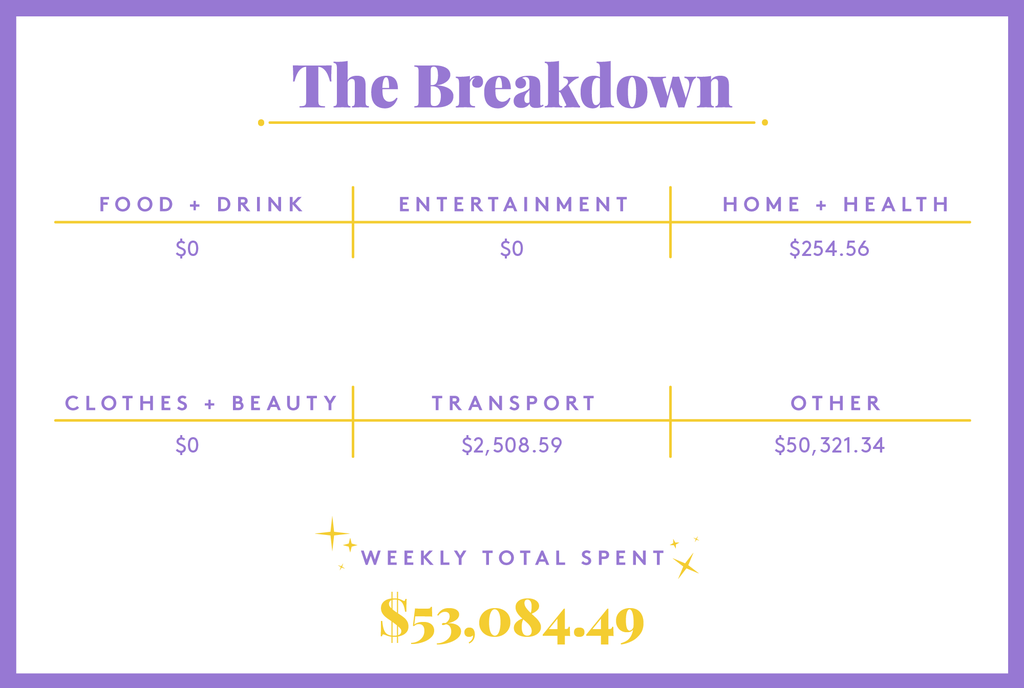
Daily Total: $165.91
Day Two
6 a.m. — My alarm goes off, but I snooze and don’t get up until almost 7. I didn’t sleep well; I had weird dreams and am anxious about the tractor and really this whole endeavor. I get up, feed my cat, make coffee, and write a little in my bullet journal. D. and I have a quick morning meeting about the tractor and opening a business bank account. Today is one of my days at my actual job (I manage a community garden/farm half-time), so I get dressed and do a little morning skincare (vitamin C serum and sunscreen) and leave by 8.
1 p.m. — After spending the morning weeding, thinning beets, and figuring out the irrigation system (I just started this job last month, so am still learning the space), I sit on a bench to eat my lunch (leftovers from last night’s dinner) while I check my email and look at my bank account to get ready for the tractor arriving later today. I see that I got an overdraft fee on my checking account ($23) because the balance wasn’t enough for the check I wrote last week for the fencing materials. I’m annoyed at myself for missing that. I have a bunch of emails from my boss. Looks like I need to spend some time on a computer, so I finish up my garden projects and head out. $23
2 p.m. — On my way home I run a few errands — pick up a pack of contacts from my eye doctor (paid for last week when I ordered them) and a prescription from the pharmacy. Because I just moved between counties, my old health insurance card doesn’t work and I haven’t fully got my new health insurance set up (the whole process seems overly confusing, but maybe it’s just me?) so I have to pay out of pocket for my prescription, which I haven’t had to do before. Luckily the pharmacist finds a discount somehow, so it’s $50 instead of $200 ($51.49). I also grab a bottle of vitamin D capsules because my mom just gave me a whole speech about how it boosts immunity ($29.42), and a phone charger to keep at work ($19.06). $99.97
4 p.m. — The tractor arrives! I take a break from my computer work to meet the guy outside. He drives it off the trailer and now we have a tractor! It’s old and rumbly but I still feel like it immediately turns this property into a farm. D. pays him $4,800 in cash ($2,400 after we split it). She’s been paying for most of the big expenses. We just opened our business account today so hopefully this week we can do some math and I will probably end up putting a lot more money into the account than she does. I’m still on the clock so I head back inside and finish up some work for the community farm. Even a few hours working from home is distracting, I have so much respect for everyone who’s been doing it all day every day all year! $2,400
5:30 p.m. — My dog is wiggling and wanting her walk so I close the computer and head outside, feeling so grateful for this land and for this path. We get home around dark and I find a few packages on the porch. One is my Christmas present from my mom, which is a beautiful handmade tool belt (I sent her the Etsy link), and the other is a bunch of Pact clothing I bought last week: underwear, a new bra, and a couple of pairs of joggers. It all fits great and is super soft. It was definitely a big clothes purchase, but I know I will use it all for a long time. I eat the delicious dinner my sister made, do the dishes, shower, put on my face butter (like everyone I’ve gotten very into skincare in the last year or so), and settle down to read (or more realistically, swipe on Bumble), but I’m so tired that I turn the lights off and am asleep by 8:30!
Daily Total: $2,522.97
Day Three
6 a.m. — I slept for like ten hours?! I make coffee, feed the cat and dog, journal a little, and make a list of work priorities for the day. Today is one of my first days working alone at home since my sister is going back to work today after a few weeks off. We check in briefly while I eat breakfast, then I get dressed and try to get organized.
9 a.m. — I spend most of the morning cutting two-by-fours to make gates for the dog fence I’m putting up, but I also take a break to watch part of the inauguration, how could I not? My friend, K., calls and we chat a little about the inauguration and also try to figure out why she hasn’t received a deposit for money that I tried to wire her. It doesn’t seem like it’s gone through. K. bought property with a few other friends last year but needs to build her own house, and I convinced her to let me give her money to build a small cabin. I’m grateful that our relationship is close enough that she was able to accept the money, which can be tricky.
12 p.m. — I take a lunch break (eggs on toast with some arugula) and have another phone chat with my friend who lives in Portland. We mostly just squeal about the end of the Trump era. Then back to work. I get the gates mostly done and work on the fence bottom where I’m trying to stake it down so my dog can’t dig her way out.
5 p.m. — It’s still getting dark so early! My dog has been lying in the sun most of the day, with occasional little sprints around. At sunset, I stop and take her for her walk. I’m supposed to make dinner but am not super prepared, so I start making a potato soup. When D. gets home she’s too hungry to wait so we just eat leftover tacos and I make the soup for tomorrow. It comes out more like gravy than soup though, but whatever. We check in about the second tractor purchase: we have our quote from the dealership for the discounted tractor, so we work on the credit application. D. has our business account set up so we do some math around how much money we’ve each spent on farm supplies and then I transfer more money to the farm to even it out. We are now equally invested in the farm.
8 p.m. — My brain stops working around 8 and D. and I start bickering so it’s time to be done. I don’t feel like I got enough done today but hey, Trump’s out of the White House, so we can call it a good day. I swipe around on Bumble, do part of an NYTimes crossword puzzle, and fall asleep.
Daily Total: $0
Day Four
7 a.m. — I haven’t been getting up with my alarm this week. I really like to have a lot of time in the morning but it hasn’t been happening. I make my dog go outside to run around a little because she will have to be inside by herself a lot today since D. and I both have work. I’m annoyed again that I didn’t finish her fence. I make coffee and finish up the credit application for the tractor and send it in. Then I eat a bowl of cereal, pack another leftover beans-and-cabbage lunch, and leave by 8:15.
9:15 a.m. — I have a few work errands to run before getting to the garden, but they take longer than expected and I’m late meeting the compost intern who is starting today. It doesn’t feel good to start things off already feeling behind. She is super nice though, and we spend a few hours together (masked and distanced and outside) talking about compost and turning the piles that I have been building. It’s fun to work with someone else since I usually work by myself. She is a college student who had to come home in the spring because of COVID, and it turns out that she’s into creative writing as well as farming, like me, so I enjoy talking with her. She also gives me the awesome tip that you can make pesto from parsley! We have a huge bed of parsley in the garden that no one is using, so we both harvest a bunch.
12:30 p.m. — The intern leaves and I eat my lunch while tidying up the compost-monitoring log and checking my email. I’ve been trying unsuccessfully to get a seed order in for a few days, but the seed companies are so backed up with all the new COVID gardeners. I email my boss about the budget for seeds, check the greenhouse to see how my little plant starts are doing, water a few beds that seem a little dry (even in January!) and call the garden supply store to figure out which kind of organic spray to use on the orchard. I head home mid-afternoon to spend some more time on this seed order. I see that the guy from my Monday video date messaged me asking to hang out, which is surprising to me because I felt like it was very awkward and that we had no connection. I ignore the message for now.
4:30 p.m. — I finish up work and take my antsy dog for a long walk. When I get back I have a glass of wine while I get dinner together: yesterday’s soup, toasted bread for croutons, cheese, and parsley pesto. It’s all still hot when D. comes home, and I can tell she’s relieved to not have to think about food after working all day. It is a perk of living together, even though it feels silly sometimes to have moved in with my sister at 33. I lived alone all of last year and got used to it, but it’s also really nice to have dinner cooked for me sometimes and to be going into this project with someone else.
7:30 p.m. — After we eat dinner D. says that seeds are really selling out fast, so we decide we should get the most important seeds ordered too. We are both tired but we rally for an hour or so and pick out some good-looking varieties of carrots, turnips, broccoli, and kale. The total is $270.55, and it’s the first purchase I make with my new business card ($135.28 for my half) which feels pretty exciting. Then I’m fully tired so I shower and am in bed by 9:30. $135.28
Daily Total: $135.28
Day Five
7 a.m.— I get up a little later than I’d like, make a pour-over coffee in my room, and look over my week’s to-do list. At least we’ve figured out our action plan for the tractor; that was a really big one. My sister comes to check-in. Today is another day where we can work together here at the property, so we try to prioritize jobs. It’s rainy and I’ve been meaning to write our first Instagram post as a farm, so we decide it’s worthwhile to spend some time writing a post about this land and its history and our privilege and complicated feelings about participating in the history of Indigenous land theft and racist economic policy. It takes longer than I thought! I’m realizing that’s a real trend in everything I do.
11 a.m. — We finally get something written up and posted and head outside to get stuff done. In my mind, I tend to only consider physical work “real” work, so I have to remind myself that the other work is important too. We hang a gate and work on installing the bottom boards of the dog fence but don’t get all that far. It starts raining again so we go inside and see an email that our credit has been approved for the new tractor! It’s exciting that that’s really moving forward.
2 p.m. — I eat a taco with leftover beans (yet again) and D. leaves to pick up hay for her sheep. I keep working by myself for a while and replant a row of lavender, which feels good to do because rain is coming in the next few days.
4 p.m. — My old childhood friend, H., comes by to have a distanced hang. I haven’t seen her in forever; she was my best friend my whole childhood and through high school, but we haven’t kept in great touch since then. Now that I’ve moved back to the area where I grew up, there are a lot of friends in the area who I haven’t been close to for a long time. It’s great to see her. We walk around a bit with the dog. When it’s close to dark, D. gets home and H. heads out. I heat up some soup and cook some broccoli for dinner.
7 p.m. — I spend some time on the computer, writing the “company description” part of our business plan, reading some articles, and looking at the website for a new BIPOC-led permaculture farm in my town. Last year this group was fundraising to find land and it looks like they found a beautiful spot right near here! I’ve been emailing with the organization’s director a little and want to support them so I set up a monthly donation ($50 included in monthly expenses). My friend K. texts me her account number and I finally get this transfer to go through; I think I was just spelling her name wrong before ($50,000). She sends me lots of heart emojis and it feels so exciting to know that she’ll be able to have more security and get her cabin built this year! $50,000
Daily Total: $50,000
Day Six
6:30 a.m. — I wake up pretty rested. I feed my cat, take my medication (an antidepressant that I’ve been taking for about two years), and unload the dishwasher while my coffee brews in my French press. My sister comes into the kitchen but I’m not ready for interaction so I bring my coffee back upstairs to my room to catch up on my bullet journal.
9 a.m. — I work this morning so I head out and stop at the nursery to pick up some spray for the fruit trees (I put it on the organization’s account) on my way to the garden. I spend the morning pruning and spraying the orchard. It’s a nice sunny day and I feel good that I got this done while there is a break in the rain, since you need a sunny 24-hour window to apply copper. I listen to podcasts and occasionally chat with people who wander through the garden while I work. It’s nice to be taking care of this beautiful outdoor space that people can enjoy during the pandemic.
1 p.m. — I leave work and stop at the hardware store to buy some more hinges and latches for the gates I’ve been working on ($116.33, split with D.). I get home and heat up some soup for lunch. I’m feeling kind of tired and irritable. D. is working outside so I ask her to help me hang one more gate and then we do some planting. I spend a little more time putting latches on the gates. $116.33
4 p.m. — My mom comes by to go on a walk. Since I moved back to the area about a month ago, I try to see her once a week for a distanced walk. She’s almost 75 so we are really careful to keep distanced and masked. She tells me she got her first vaccine dose this week! She’s going to start administering the vaccine as soon as she gets her second dose (she’s a retired physician but I guess under the circumstances she can give shots). I hope that means I can give her a hug soon. When we get back, we sit outside and talk a bit more. When she goes home, I go inside and take a shower. My sister is baking a torte and setting up a projector screen on our patio with a firepit; she has a few friends coming over to watch a movie.
6 p.m. — I bundle up in warm clothes and go outside to say hi to D.’s friends. They have brought pizza and salad so I grab a slice and everyone settles down within their pods for the movie, which also includes a Powerpoint presentation. D. has prepared a presentation on the entertainment value of the Fast and the Furious movie franchise. It’s pretty hilarious, and then we watch one of the movies. It’s a pretty goofy evening and it’s been a while since I did anything goofy so it feels good.
9 p.m. — I get sleepy while everyone is still here and head inside (I’m really good at ghosting social gatherings) and head to bed.
Daily Total: $116.33
Day Seven
7:00 a.m. — I get up slowly, make coffee, journal a bit.
8:45 a.m. — Settle in for a weekly meeting with D. One of our agenda items is buying our website domain for the farm, so I log onto Squarespace and buy a year’s membership ($144), accidentally using the wrong card. $144
12:30 p.m. — My friend stops by to visit on their drive home and to bring us a mattress they’d had in storage and don’t need anymore. I make tea and we have a little outside distanced hang until it starts to drizzle. They head home and D. leaves to go grocery shopping (it’s her week).
2 p.m. — It was nice to see my friend but it also makes me feel sort of sad. They are still living in the town I just moved from and talking about the community there makes me a bit homesick and lonely for community here. Also inevitably my ex gets brought up and that always puts me in a bad mood. I get very tired when I’m sad. I lie down on the couch with my dog and take a half-nap for an hour or so.
4:30 p.m. — D. gets home and we work on putting a giant whiteboard calendar up on one wall in the office space we’ve created. I take my dog for her walk; it’s drizzling again.
1 a.m. — My afternoon nap messes up my energy and I don’t turn the lights out until late.
Daily Total: $144
Money Diaries are meant to reflect an individual’s experience and do not necessarily reflect Refinery29’s point of view. Refinery29 in no way encourages illegal activity or harmful behavior.
The first step to getting your financial life in order is tracking what you spend — to try on your own, check out our guide to managing your money every day. For more money diaries, click here.
Do you have a Money Diary you’d like to share? Submit it with us here.
Have questions about how to submit or our publishing process? Read our Money Diaries FAQ doc here or email us here.
Like what you see? How about some more R29 goodness, right here?