DMTBeautySpot
featured
Khareem Sudlow
DMTBeautySpot
Faran Krentcil
featured
The Business of Beauty Haul of Fame: $30,000 for an Erewhon Smoothie?
May 03, 2024BruceDayneWelcome back to Haul of Fame, the weekly beauty roundup of new products, new ideas and a serious question for J.Lo.
Included in today’s issue: Beautycounter, Bella Hadid, Biopelle, Byredo, Dime, Dualist, Ellis Brooklyn, Franz Skincare, Gen See, Grace & Stella, Gretchen Wieners, Goop, Harry Styles, Jennifer Lopez, Kate MacLeod, Kiko Milano, Kulfi, Laneige, Milk Makeup, Mother Science, Olive & June, Ouai, Pat McGrath Labs, Philip B., Redken, Urban Decay, UMA Oils, Versed and a bunch of French hairbrushes.
But first…
When the brand Truly Beauty asked me to get a drink, I assumed they meant one of the excellent martinis at Jac’s on Bond. They did not. The self-care range most famous for its delectable rainbow-swirl shaving cream (called Unicorn Fruit, and truly delightful on the skin) is teaming up with Erewhon on a new smoothie, the Truly Cooka Colada, out May 1.
The drink has all parts of the coconut — the water, cream and fruit meat — plus pineapple, banana, maple syrup and mango glaze. It retails for $9 (cheap for Erewhon, right?) and mirrors the brand’s Cooka Colada shave butter, which also has coconut and pineapple extracts. Truly Beauty’s founder, Maxx Appelman, told me that “Erewhon approached us about the collaboration. Our products are sold in all 10 of their stores as their headline high-end shave brand.”
In LA, Erewhon is an Eden for celebrities and the people who want to detox like them. A smoothie placement can mean top-of-mind visibility for influencers and A-listers. And while Appelman says it didn’t cost anything to get Truly Beauty’s drink onto Erewhon’s menu, “we did pay a $30,000 fee to cover free smoothies” for subscribers to the store’s membership programme.
Appelman says his brand has been at Erewhon for about a year, and while under 5 percent of their revenue comes from the supermarket, “on a per-store basis, Erewhon is one of our strongest retailers … We’ve had a lot of success with them.”
The prospect of linking a yummy-smelling product to an actually yummy smoothie is super-fun, though we’ll see if paying $30,000 to supply vegan-adjacent VIPs with free slurps is a wise investment. Dove did a smoothie partnership with Juice Press in August 2023 that linked with their body scrub scents, and gave each sipper a $3 coupon off future Dove purchases. There are now rumbles of several smoothie beauty routines linked to Met Gala Monday.
In any case, just as Starbucks cups were the “drink me” accessories of the early aughts, smoothies are making the case as the next portable status symbol. (Unlike Stanley Cups, they are also disposable. This sucks for the planet but is a boon to brand budgets.) It seems prescient to sponsor this new investable ingestible early, before a Chalamet or an Olsen casually grabs hold.
Skincare
Last summer, Kate MacLeod released a bug-repellant-slash-moisturiser called The Dusk Stone. On April 24, it crept onto Sephora, just in time for outdoor yoga season.
Also on April 24, Dualist introduced their Balancing Oil-Serum, which delivers doses of hydration and nourishment for $95. It is fragrance-free, which is a major win for those of us wilting from seasonal allergies right now. (It’s me, hi, I’m the sneezer…)
April 26 brought the 2000 Ampoule Toner and Aeturnum Luxe Ampoule Mist from Franz Skincare. The duo comes loaded with peptides and hyaluronic acid, and yes, both products sound like they are also names for tiny spaceships. Ahsoka, you missing a ride?
Grace & Stella dropped their glitter purple under-eye patches and pink-and-purple zit stickers on April 26. They are adorable and retail between $10 and $20, about $6 less than very similar versions from Florence by Mills.
Gwyneth has entered the suncare chat! On April 29, Goop introduced Summertone Bronzing Gel, “a sheer tint that adds an instant wash of colour (and boosts your skin with antioxidants).” It’s $38, but if you’re looking for a bargain instead, the brand’s G. Tox pore refining tonic is currently $22.50, marked down from $75.
Mother Science debuted its Retinol Synergist serum on April 30. It combines retinol with malassezin, a molecule that could help reduce discoloration and hyperpigmentation. I’m surprised more brands haven’t jumped on the “mother” slang bandwagon. Related: Nicole Kidman, where’s your own skincare line?
Harry Styles loves Texas… we think. The superstar’s new Pleasing lip balms debuted at a pop-up boutique in Austin on April 27, then everywhere else on April 30. They come in two flavours — Peppermint Honey and Vanilla Fig — and cost $25 each.
Biopelle unveiled Antioxidant CE Plus Serum and C+AHA Renewal Serum on May 1. Both formulas promise a “gentle version” of Vitamin C, but just a reminder — if you’re using any type of fruit acid on your complexion, you need SPF all day, everyday!
Would you like to try new skin washes? UMA’s Deeply Clarifying Purify & Balance Gel Cleanser and Detox & Renew Pore Minimising Exfoliant both rolled out on May 2.
Cosmetics
Impress premiered its matching manicure-and-pedicure press-on nail kits on April 25. This is so smart for those everything-must-match people. And yes, it seems every nail brand has a press-on right now. (Olive & June’s came out on May 2, and include both super-neutral and blue metallic versions.) I’ll test some versions and let you know if any last through the day without falling off…
On April 25, Versed rolled out its classic Glow Drops in a sheer rose gold tint, which is a win for anyone who loves highlighter and wants to match their makeup to their Beats by Dre pink headphones. (This is not sarcasm; I see these rose gold headphones on subway riders — of all genders — at least five times a day. They’re basically an accessory at this point.)
Gen See’s new lipstick shades, Anita and Colette, arrived on April 25. Both are named after employee moms (awww!) and come in a pink nude and a latte brown for maximum ‘90s nostalgia.
April 26 brought us four new shades of Pat McGrath Labs Divine Cream Blush, including a “Vivid Orange” that’s made for deep skin tones, but could also double as an eye colour wash on lighter ones.
On April 29, Urban Decay finally launched its All Nighter Long-Lasting Makeup Setting Spray with Hyaluronic Acid, after nearly a month of its “coming soon” memo on the Ulta New Arrivals page. Welcome to the world, kid!
Beautycounter dropped its Cheeky Clean Cream Bronzer on April 30, which is the least dramatic news about the company this week.
Nordstrom has the exclusive on Kiko Milano’s “Bridgerton” collaboration, which rolled into stores and online April 30. The range has nine super-girly products, including a blush and highlighter duo, lipstick, gloss, eyeshadow palette, eyeshadow stick, and metallic liquid eyeliner. My favourite is the Gilded Glaze Shimmering Cream Eyeshadow, probably because it’s the one I can imagine best on Bridgerton star Nicola Coughlan.
New eyeliner alert! On May 1, Kulfi introduced its Kajal Eyeliner in a new shade called Jamun Glaze, named for a really gorgeous Indian plum. The brand will donate 5 percent of eyeliner proceeds to the mental health collective Sad Girls Club, so $1 from every purchase.
May 2 brought us a new Pore Eclipse Matte Blur Stick from Milk Makeup. Besides the usual smoothing effects, it also has tea tree oil in the formula to help curb breakouts.
Hair Care
I don’t know when hairbrushes became the new prestige beauty tool, but voila. In February, La Bonne Brosse (“The Good Brush”) made a quiet appearance at Raquel New York, the in-the-know Tribeca skin spa. The brushes are made in France with lightly twisted handles for a more ergonomic grip, plus bristles that claim to enhance hair shine and mobility. This week, Altesse Studio, another heritage brush brand with 100 percent boar bristles from France, debuts online at Bloomingdale’s, Nordstrom, and IRL at C.O. Bigelow. I’ve tested La Bonne Brosse and I like it very much; it makes my curls quite soft and almost doll-like. That’s perhaps the whole point — hair brushes are very much a symbol of global girlhood, and when you couple them with the French Girl Beauty allure that’s still tres intense, the selling potential is so real. But so is this question: Who’s paying $320 for a brush?
If you believe shower creams are a better investment, Philip B.’s new Peppermint Avocado conditioner came out on May 1.
Redken launched its Acidic Bonding Curls line with six products, including shampoo, conditioner, leave-in conditioner, a curl mist, a gel and a curl cream. It claims to use new technology to “restore the natural curl pattern and health to processed, damaged curls.” As someone with 3c texture prone to breakage, I found the Hydrating Curl Cream ($32) to be the real winner. It helps coils keep their shape without feeling greasy or crunchy. It also doesn’t have much of a scent, which is reassuring, considering the new insistence that haircare should also be perfume.
Fragrance
Speaking of that insistence, Ouai St. Barts Hair and Body Mist dropped on April 30, with orange oil and “ocean breeze accord,” which is a fragrance compound that can smell salty and sweet at the same time. I actually do love Ouai’s signature scent, but it’s funny how its floral punch has replaced Chloé eau de parfum as the most recognizable scent at New York Pilates.
On April 25, Dime launched their Running Late perfume with “zesty citrus notes layered with blooming florals and soft musk.” The bottle is an easy-to-grab little rectangle, so if you’re actually running late, you can throw it in your purse.
Also on the ocean front, Ellis Brooklyn unveiled Miami Nectar on April 29, which is loaded with “pineapple, palm leaves, and coconut water.” (Remind me to write a column soon on how everyone wants to look like they’ve been on vacation, but nobody wants to spend the money and time to go on vacation.)
Is it a little late for a “Mean Girls” product collaboration? It is. Can we forgive the timing because Literie’s new On Wednesdays We Wear Pink candle smells like toaster strudel? We can.
Bella Hadid isn’t the only one who wants her fragrance to multitask. On April 25, Aprés Nail introduced a cuticle serum in four different scents. All are infused with turmeric, almond and jojoba oil and vitamin b. None start with an apostrophe (ahem, Bella!) in an attempt to be first on every alphabetical listing.
Modern Vanilla launched its new Jane Parfum Oil on May 1. It smells fantastic — a little hazy, a little honeyed — but because it’s an all-natural oil, it just doesn’t last on my skin for that long. Creator Erika Kuhn recommended I roll it onto a cotton t-shirt neck instead, which is a cool trick.
May 1 also brought us the beloved Mojave Ghost as a solid perfume — the first time it’s done that — and the debut of JLo fragrance’s new scent Limitless, which includes jasmine, ylang ylang, and patchouli oil. (JLo, do you really ever smell like patchouli oil? Please advise.)
And Finally
Laneige teamed up with the accessory company BonBonWhims on a series of kawaii “lip balm charms” for influencers and editors. (They’re basically like giving the tip of your tube a piercing.) I took a very scientific Instagram poll and asked if these beauty charms were gonna be a thing. Nearly everyone who voted “yes” was in Gen Z or has a kid in primary school. Perhaps the return of Sweet Secrets is imminent.
Sign up to The Business of Beauty newsletter, your must-read source for the day’s most important beauty and wellness news and analysis.
DMTBeautySpot
via https://dmtbeautyspot.com
Faran Krentcil, DMT.NEWS, DMT BeautySpot,
Daniela Morosini
DMTBeautySpot
featured
Your Guide to a Very Busy Week in Beauty
May 03, 2024BruceDayneIt was an unusually hectic stretch in the beauty industry, with multiple multi-billion-dollar transactions floated, and some of the industry’s biggest and buzziest brands reporting financial results. If there’s one throughline that applies to all of these companies — and plenty in the fashion industry besides — it’s that brands that don’t keep their foot on the gas will quickly find themselves left behind.
This Week’s Winners
Puig bet big on prestige beauty, and is set to be richly rewarded, on track for a $15 billion valuation upon Friday’s initial public offering, after pricing shares at the top end of guidance earlier in the week. The family-owned company is a century old, but its current form was built on a rapid-fire series of acquisitions — five in the last five years, including Byredo, Charlotte Tilbury and Dr. Barbara Sturm (it also owns fashion labels Paco Rabanne, Dries Van Noten and Carolina Herrera). Each of these brands already had a strong following when it was brought into the portfolio, with Puig providing the resources needed to scale.
Also this week, Sky News reported that Manzanita Capital has hired bankers to explore a sale of Space NK, the premium British beauty retailer, seeking a valuation as high as $500 million. The upmarket chain is the go-to retailer known as a launchpad for popular international brands to make their British debut, cornering the role Sephora plays in the US, of carrying top-performing labels like Rare Beauty and Summer Fridays. It’s a lucrative niche: earnings have continued to rise steadily post-pandemic, generated with a relatively small network of 76 stores, in the UK. A combination of a generous loyalty programme, well-trained staff and its reputation as a tastemaker make it a continually attractive shopping destination.
Everyone Else
Not so long ago, Olaplex would have been on the list of red-hot brands with soaring sales. But its innovative approach to hair care as a pioneer in bond-building has since amassed plenty of competition from brands like K18 and Epres. Without exciting new offerings to keep ahead of rivals, sales have collapsed. On Thursday, the company reported a 13.1 percent decline in first-quarter sales compared with a year earlier. This counted as progress: a year ago, the drop was nearly 40 percent.
Meanwhile, L’Occitane chairman and majority shareholder Reinold Geiger put in a bid to take the group private, a move that would allow him to address the lagging performance of “dusty” flagship brand L’Occitane en Provence away from the prying eyes of investors (the company has done a better job with cult sensation Sol de Janeiro, which last reported 199 percent sales growth and an expectation to reach $1 billion in the past fiscal year).
And then there was The Estée Lauder Companies. The world’s second-biggest beauty conglomerate after L’Oréal reported a rare increase in sales (it had seen declines in five of the last six quarters). But it also warned that annual net sales would decrease by 1 to 2 percent, sending its stock tumbling.
Lauder has its share of hot brands, including fragrance lines Jo Malone London and Le Labo, and affordable skincare label The Ordinary. But most of the company’s sales come from stalwarts like La Mer and Clinique, and the portfolio includes brands like Smashbox that are a long way from their days as the most in-demand beauty start-ups. Most of these older brands have struggled over the course of the pandemic, though La Mer and Estée Lauder returned to growth in the most recent quarter.
Estée Lauder and L’Occitane made the same mistake of counting on the largest and fastest-growing emerging market — China — to boost these brands’ performance rather than trying to freshen their appeal with a new generation of consumers. Years later, they are still working to recover from that mistake.
Course Correction
All three of these companies have learned the hard way that staying relevant in an industry of fast-moving trends and an endless supply of buzzy start-ups requires constant innovation. There are no untapped markets where customers will automatically buy products just because they recognise the name on the box.
ELC is putting this learning into action with some promising, albeit preliminary, results. La Mer has embarked on youth-driven campaigns with Gen-Z influencers emphasising that the brand’s reformulated hero Soft Cream was “not your mom’s La Mer.” Following success with Clinique entering Amazon, ELC is planning on moving more brands into the channel as it looks beyond the department store beauty counter for distribution.
In China, too, brands have learned the importance of keeping up with its fast-moving trend cycle. ELC’s earnings report noted that a return to growth in China was driven not just by hero products, but new product innovations such as La Mer’s Moisturising Fresh Cream and Estée Lauder’s Ultimate Diamond Transformative Brilliance Soft Creme Moisturizer. L’Occitane previously announced a €100 million ($106 million) investment into marketing to revive its core properties, like L’Occitane en Provence and Elemis.
But the China market is no longer low-hanging fruit for growth, even without the pandemic restrictions that disrupted beauty spending. Successful navigation of beauty’s hype cycle will remain key in every geography this year as conglomerates need to keep momentum going on fast-growing acquisitions while continuing to invest in keeping their classic brands fresh.
No matter how much cachet brands have with consumers today, failing to evolve both in messaging and innovation can turn a hairline fracture into a full-on break. Puig and Space NK should take heed.
THE NEWS IN BRIEF
FASHION, BUSINESS AND THE ECONOMY

LVMH considering options for Marc Jacobs amid buyer interest, say sources. The review is in the early stages and LVMH hasn’t made a final decision on how to respond to the interest. LVMH has restructured Marc Jacobs in recent years, which led to a simplification of its product offering.
Tapestry-Capri deal to face September hearing. The preliminary injunction hearing on the US Federal Trade Commission’s bid to block Tapestry’s takeover of Capri will likely last a week and a half, the judge said. Tapestry shares rose 2.3 percent and Capri shares gained 0.8 percent following the news.
Pandora surges as lab-grown diamonds lift sales. The Danish company said organic sales are projected to rise 8-10 percent this year. The shares advanced as much as 6.6 percent in Copenhagen, and are up more than 80 percent in the past 12 months.
Vinted moves into profit after 61 percent sales rise. The Lithuania-based group said growth had been spurred by entering new markets and expansion into luxury fashion. Sales rose to €596 million ($637 million) last year — making it about a third of the size of Asos.
Next sales rise as inflation pressures ease. The British fashion and homewares company said full price sales climbed 5.7 percent in the first quarter, which was slightly ahead of an expected 5 percent rise. The company stuck with its outlook — that it will generate £960 million ($1.2 billion) of pretax profit with group sales rising 6 percent this fiscal year.
Mulberry’s full-year sales fall 4 percent. The British brand’s share price, which has fallen by almost 60 percent this year, declined by a further 4.5 percent. Mulberry blamed the luxury spending slowdown and a lack of VAT-free shopping for the declines.
Sneaker brand On to launch new line with FKA Twigs. The British musician will collaborate with the Swiss company on a collection of training apparel and footwear, and will serve as the face of the first collection to be released in August. Twigs is On’s first non-professional athlete ambassador since it launched in 2010.
THE BUSINESS OF BEAUTY

Shein wants to sell skincare, toothpaste and toys, too. The company is moving into other categories and has given brands and retailers access to its platform in nine European countries so far. The strategy is part of Shein’s plan to build credibility and better compete with Amazon ahead of a planned stock market listing later this year.
Bella Hadid launches fragrance line Orebella. The model launched three perfumes which will be available directly to consumers. The brand will then be available on Ulta Beauty’s e-commerce site from May 10, and subsequently in all Ulta Beauty stores from May 12.
Celebrity makeup artist Quinn Murphy launches beauty line. The label, Spatch, will debut on May 4 with a nine-piece collection of skin-perfecting products designed for professional and consumer use. It will initially be available only in the US and Canada, but Murphy hopes to offer international shipping and add more products.
PEOPLE

Sandra Stangl is exiting Banana Republic. Stangl joined the business in 2020 and sought to revive the struggling mall brand. Despite a brief uptick in sales, up 24 percent between 2021 and 2022, the brand’s growth has stalled.
Peloton CEO to step down. Barry McCarthy announced plans to leave his post as the struggling fitness company embarks on a major restructuring that will reduce its global workforce by 15 percent. The shares fell as much as 16 percent upon the news.
Cascale appoints new CEO. Former Under Armour COO Colin Browne has been appointed to lead the industry organisation formerly known as the Sustainable Apparel Coalition. The move was positioned as a way to acknowledge its broadening scope as it aims to address industries beyond apparel.
Susanna Lau joins System magazine as digital editorial director. The move comes as System owner Mike Obenson aims to turn what began as a bi-annual print title into a global media brand with a stronger digital offering. Lau, known online as Susie Bubble, was part of the first wave of digital creators to shake up fashion media in the mid-2000s.
MEDIA AND TECHNOLOGY
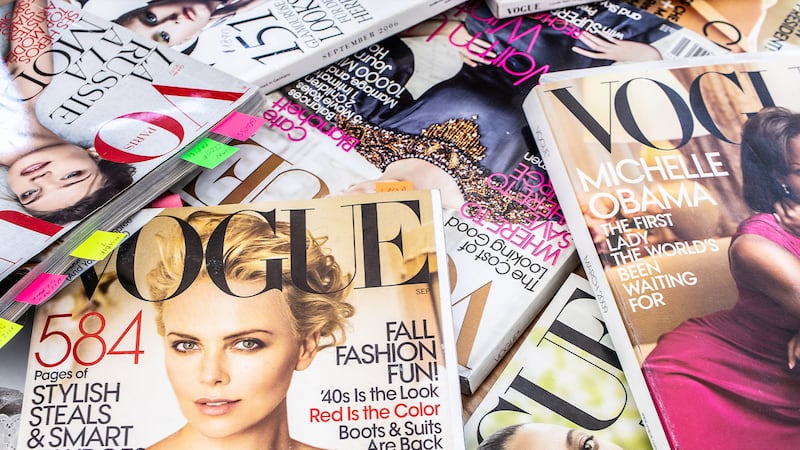
Condé Nast Union threatens strike ahead of Met Gala. Union members have pledged “to walk off the job” if progress is not made on contract negotiations. They have also promised “a week of union actions” in a statement from the NewsGuild of New York, the union’s organising body.
TikTok Shop tops 500,000 US sellers after 2023 e-commerce launch. Worldwide, TikTok’s e-commerce platform had more than 15 million sellers in December, adding more than 6 million in the second half of the year. E-commerce is seen by TikTok as its next big potential revenue source as well as a way to keep users spending time and money on its app.
Compiled by Yola Mzizi.
DMTBeautySpot
via https://dmtbeautyspot.com
Daniela Morosini, Liz Flora, DMT.NEWS, DMT BeautySpot,
DMTBeautySpot
Erin Franklin
featured
Enter to Win the “Come Home” Bible Study
May 03, 2024BruceDayneCome Home just released and we’re celebrating with a GIVEAWAY!
In this 7-session study, Caroline Saunders follows the theme of home through the Bible. From humanity’s first home to our eternal one, we’ll see God drawing near to abide with us. We’ll find that even the best aspects of home here are just a glimmer of what God is building for us through Christ. This study will affirm that our longing for home is good and purposeful, pointing us to our truest home which is found in Him.
We’re giving 10 winners a copy of Come Home. Just fill out the form below to enter:
By entering today’s giveaway, you acknowledge Lifeway Christian Resources’ official promotion rules. Today’s giveaway starts at the posting time of this blog and ends on May 9, 2024 at 11:59 a.m. CST. You must be 18 to enter, and you may only enter once. The winners will be selected at random. Only participants who live in the United States or Canada are eligible to win. For questions about the rules and regulations of this giveaway, please contact Erin Franklin via email here or write to her at 200 Powell Place, Suite 100, Brentwood, Tennessee, 37027-7707.
The post Enter to Win the “Come Home” Bible Study appeared first on Lifeway Women.
DMTBeautySpot
via https://dmtbeautyspot.com
Erin Franklin, DMT.NEWS, DMT BeautySpot,
As Adidas aims to build on hot demand for its three-striped white and black Samba and multi-coloured Gazelle sneakers, it’s also taking steps to prevent the shoes from becoming victims of their own success.
The German sportswear giant ramped up production of the sneakers, known as “terrace shoes” and inspired by soccer fans’ footwear in the 1970s and 80s. Sales subsequently jumped from a couple of hundred thousand pairs a month at the start of last year to millions of pairs a month, according to CEO Bjorn Gulden, with Adidas now looking to further increase their popularity.
The company said terrace shoe sales helped drive its strong performance in the first quarter, without giving detailed figures for the Samba, Gazelle and Spezial. The shoes are priced at around $90 and up, with limited edition collaborations costing up to $350.
Investors and analysts are watching closely for signs of Adidas becoming overly reliant on the shoes, with the abrupt ending of the highly profitable Yeezy business still fresh in their memories. Adidas made a loss last year for the first time in 30 years after its break-up with U.S. rapper and producer Kanye West brought that trendy sneaker line to an end.
The Adidas Samba won Footwear News’ 2023 “Shoe of the Year” award, the first win for the brand since the Yeezy Boost 350 in 2015.
Bernstein analyst Aneesha Sherman estimates the terrace shoes will drive €1.5 billion ($1.61 billion) of sales this year, around 7 percent of Adidas’ overall revenue and close to the €1.7 billion Yeezy brought in at its peak.
She predicts terrace shoe sales will likely peak in all regions this year.
“Obviously and clearly, this trend will not last forever,” said Thomas Joekel, portfolio manager at Frankfurt-based asset manager Union Investment, which holds Adidas shares.
“At the end of the day, the consumer decides, and companies like Nike or Adidas have to be agile to jump on these trends.”
When British Prime Minister Rishi Sunak was seen sporting Sambas in a clip posted on Instagram earlier this month, some Britons felt he had dealt a blow to the shoe’s street cred. Sunak later jokingly apologised to “the Samba community”, but CEO Gulden said Sunak’s penchant for the shoe had had no impact on sales.
Limited Editions
Broader trend cycles can be bruising for the big sportswear makers. In 2018, Adidas sales in Europe, its biggest market, fell when its minimalist white Stan Smith shoes started to go out of fashion. And Nike is currently scaling back supply of its classic Air Jordan 1 shoes due to weaker demand.
So Adidas is trying to spread its bets. Its chunkier, skater-style Campus shoes are becoming more popular and out-selling the Samba in some markets, Gulden said. Adidas also plans to ramp up marketing of its classic Superstar shoe to drive a renewed trend for it next year.
It recently launched a $200 version of the shoe with designer Edison Chen, featuring a rippled sole. Gulden said Adidas has been working to clear the market of seasonal colours of the Superstar, focusing only on the classic black and white, so as to make sure the market is “fresh” for new launches later this year and next.
“We will maintain the current franchises, and then time the activation of Superstar as we and the retailers need it,” Gulden said. “We will not push it globally in huge volumes. We will hold it back and let the consumer decide when he or she wants the Superstar.”
Bringing out more expensive limited-edition versions in collaboration with designers, like the $350 Y-3 Gazelle with Japanese fashion designer Yohji Yamamoto, is one way to keep a product in fashion.
“What Adidas and Nike are doing with some of their product is trying to follow the luxury playbook – premiumisation, exclusivity, restricting supply, making it all more desirable so you can have bigger margins and create a halo effect for the brand,” said Matt Clark, retail expert at consultancy AlixPartners in London.
For retailer JD Sports, new variations on the Samba shoe in different colours and materials are helping maintain shoppers’ engagement, CEO Regis Schultz said in its recent results. Retailer Foot Locker also flagged “strong demand” for Adidas terrace styles.
“Gulden is very much aware of the fact that you should not overstretch what you are doing to keep the model – to keep the brand and the model hot,” said Cedric Lecasble, analyst at Stifel.
“If they distributed tens of millions of Samba in the same year, they would sell them probably, but they would probably also put an end to the Samba dynamic,” he said.
By Helen Reid
Learn more:
How Adidas Sambas Took Over the World
The humble trainer, once the reserve of football fans, Britpop kids and the odd skateboarder, has become as ubiquitous as battered Converse All Stars in the 00s indie sleaze years.
DMTBeautySpot
via https://dmtbeautyspot.com
Reuters, DMT.NEWS, DMT BeautySpot,
DMTBeautySpot
featured
Khareem Sudlow
Op-Ed | The Rise of the Unwasteful Brand
May 03, 2024BruceDayne“There will never be another start-up fashion brand that will reach $1 billion in revenue.” I wrote those words ten years ago in an op-ed entitled “The End of the Billion Dollar Brand.” Looking back, it was a pretty good prediction: witness the financial graveyard of over-capitalised, venture-backed brands, from Allbirds to Outdoor Voices to NastyGal.
These brands wasted money trying to acquire customers that simply weren’t there; wasted cash building up wasted inventory that customers didn’t want; wasted opportunity not selling what they did want; and wasted the cost of people they didn’t need, who wasted time on things they couldn’t do. And they’re no outliers — they were just bigger, faster and louder. For every NastyGal, hundreds of lesser-publicised brands went under because of waste.
Of course, Shein was the one (very big) exception. The Chinese juggernaut generates a reported $45 billion in revenue and $2 billion in profit annually. Shein is faster, shorter, wider, more optimised and more technologically-advanced than anyone else in the market. It’s the ultimate rational economic animal with a business model based on hyper-efficiency.
My new prediction: in 10 years, there will never be another brand that wastes anything: inventory, marketing, time, money, people, resources or anything else. There can’t be: the waste in the global fashion industry has brought it to the brink of economic collapse. The industry spends a lot of time talking about waste in its environmental form (a worthy topic, if often hijacked by meaningless pledges and hollow actions). But from my vantage point, the existential crisis for fashion is waste in its economic form.
The True Cost of Waste
Inventory is at the core of fashion industry waste because it consumes so much money and resource. Making products months in advance and storing them for some uncertain future sale makes no sense: 20 to 30 percent of garments produced will be unsold or returned. Far more are heavily discounted when retailers push panic buttons. Inventory impacts everything: not only wasted products but also wasted cash, people, materials, energy, water, dyes, storage, transportation and more.
More accurate sales planning is not an art; it’s a science. The Shein recipe is simple: watch what consumers want and then copy it, place lots of small orders with short delivery schedules, and automate the hell out of everything other than cheap manufacturing labour. No wasted inventory. The company’s ambitions are limitless: it will open its platform to external customers and try to expand to every market.
There is only one way forward for the rest of the fashion industry: eliminate inventory and all of its waste by making everything on-demand at scale. “Unwasting” inventory, meaning restructuring every part of the industry’s value chain to eliminate the need for it, will open up a future of abundant opportunities and usher in a new era of creativity.
Despite its focus on hyper-efficiency, Shein is actually quite wasteful. Consider the waste associated with disposable clothing, air and water pollution, the theft of intellectual property, people toiling in abhorrent labour conditions. Shein is indifferent to the true costs of these forms of waste because it can depend on societal and governmental indifference.
The only way forward is to make this kind of waste transparent, accountable and costly. And indeed, a tsunami of new regulation is on the way and it’s Shein’s Achilles heel: adding $5 or $10 to each garment or increasing shipping costs will change Shein’s business model considerably. It will happen (see France’s new fast fashion tax) little by little and then all at once. Shein’s model is based on cheap, and a $10 tax on a $10 dress will change everything.
The Unwasteful Brand
The unwasteful brand has one focus: maximise value. This might sound bad, but doing good and doing well are not antithetical; they are mutually dependent if we want to survive as an industry and a species. Waste is the perfect example: eliminating it saves the planet and creates an economically successful industry where creation and innovation reign.
Imagine how no inventory unlocks creativity: for a creator, the cost of being wrong is zero! No minimums, no cash commitments. Instantaneous reactions to the world around us. Copying no longer matters because creators can evolve faster than copiers can copy.
There is no alternative to unwasting. As with any systemic (and seismic change), there will be resistance. But the companies that embrace this change will create a much different-looking industry than exists today in terms of creativity, opportunity, impact and profitability.
The unwasteful brand demands a real-time, on-demand global supply chain. This is complex and daunting. But, for the first time in history, the tools to manage this complexity exist in the form of artificial intelligence. Imagine beautiful clothing, transparently and accountably manufactured at scale, only after the customer purchase, and delivered in a couple of days.
A sci-fi future? I think not. While we still may not see another billion dollar brand, a profitable, healthy, multi-trillion dollar industry with minimal economic and environmental waste is within our reach.
Lawrence Lenihan is a former venture capitalist and the chairman and co-founder Resonance.
The views expressed in Op-Ed pieces are those of the author and do not necessarily reflect the views of The Business of Fashion.
How to submit an Op-Ed: The Business of Fashion accepts opinion articles on a wide range of topics. The suggested length is 700-1000 words, but submissions of any length within reason will be considered. All submissions must be original and exclusive to BoF. Submissions may be sent to opinion@businessoffashion.com. Please include ‘Op-Ed’ in the subject line and be sure to substantiate all assertions. Given the volume of submissions we receive, we regret that we are unable to respond in the event that an article is not selected for publication.
Disclosure: Lawrence Lenihan is part of a group of investors who, together, hold a minority interest in The Business of Fashion.
DMTBeautySpot
via https://dmtbeautyspot.com
Lawrence Lenihan, DMT.NEWS, DMT BeautySpot,


