February’s purchases consisted of some new finds and a few old favorites. And when I say favorites, I mean true favorites – things I’ve purchased over and over again. I can’t lie, most of my orders this past month were for June. But hey, February’s her birthday month so she deserved to get a little spoiled!
Palo Santo and Sage
Do you use Palo Santo? I absolutely love it. Burning these little pieces of wood leaves your home with the best scent. It is my favorite way to calm any anxiety and do a little reset. I love mixing this with the ritual of burning sage for a major boost of positive energy (great for a morning meditation).
Lots of Lace Bras
So I think I found my new favorite bra, which is very exciting became good bras are so hard to come by. I ordered one in white just to try it out, and loved it so much I ordered another in beige and then another in black. You know what they say – If it ain’t broke, don’t fix it!
Face Masks for June
Anyone else have the hardest time getting their little ones to wear masks? Testing these out to see if the fun colors will help June get used to them.
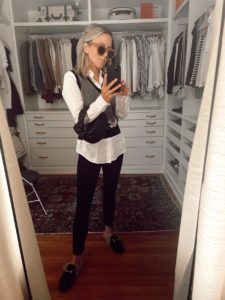
Leather Shacket
I don’t know about you, but I’m still living for a shacket {commonly referred to as a shirt-jacket}. I ordered this white faux leather one from The Drop this past month and I love it. It is the perfect elevated basic.
More Pajamas for June
I have a confession to make. June may or may not have this pajama set in every color. It’s just too perfect and she loves it. This past month I ordered one in black and another in pink. I seriously cannot get enough of these soft sets.
Ballet Clothes for June
June started ballet this past month and I still can’t get over it. She is seriously the cutest thing ever in her little dance outfits. I think this set has to be my favorite, but this dress is so darn cute too. And I of course couldn’t forget the ballet slippers!
This Cropped Sweatshirt
I am usually not a cropped kinda gal but this perfect piece hits at just the right spot to not show too much skin. I love wearing it over my yoga gear.
4 Quick and Easy Turban Headwrap Styles for Natural Hair
How I Style and Protect My Natural Hair using Scarves
Hey hey!
After being inspired by my cousin-sister-friend, Dani of ChoiceConfections , I started wearing crowns, again! I hadn’t worn a turban since my 2014 visit to Cape Town, South Africa with Tamron Hall and forgot how fly and life simplifying they are!
One morning a couple of weeks ago, I had a Zoom call coming up with 10 minutes to spare. I hadn’t showered or changed clothes since the night before, didn’t feel like rocking a baseball cap (I’ve done it many times lol), and didn’t have time to bun appropriately, so I brushed my teeth, washed my face, put on a lippie, and reached for one of the scarves I’ve been wearing around my shoulders for the last two seasons! I threw it over my messy pineapple, and basically made a bantu knot in the front (like the first tutorial in the video below) with the extra material.
After LOVING and wearing that for a couple of days, I decided I wanted NEEDED more volume on top! So I went to Youtube University and found this gem of a video by Kilahmazing and tried the second style. It’s SO easy, so quick, and super regal. But easy for me still means having to try at least twice before getting it right– it’s like an art project every time. Turbans are absolutely my new thing, so don’t say ish to me when you see me in it tomorrow, and next week, and three months from now, and 12 years later, too!
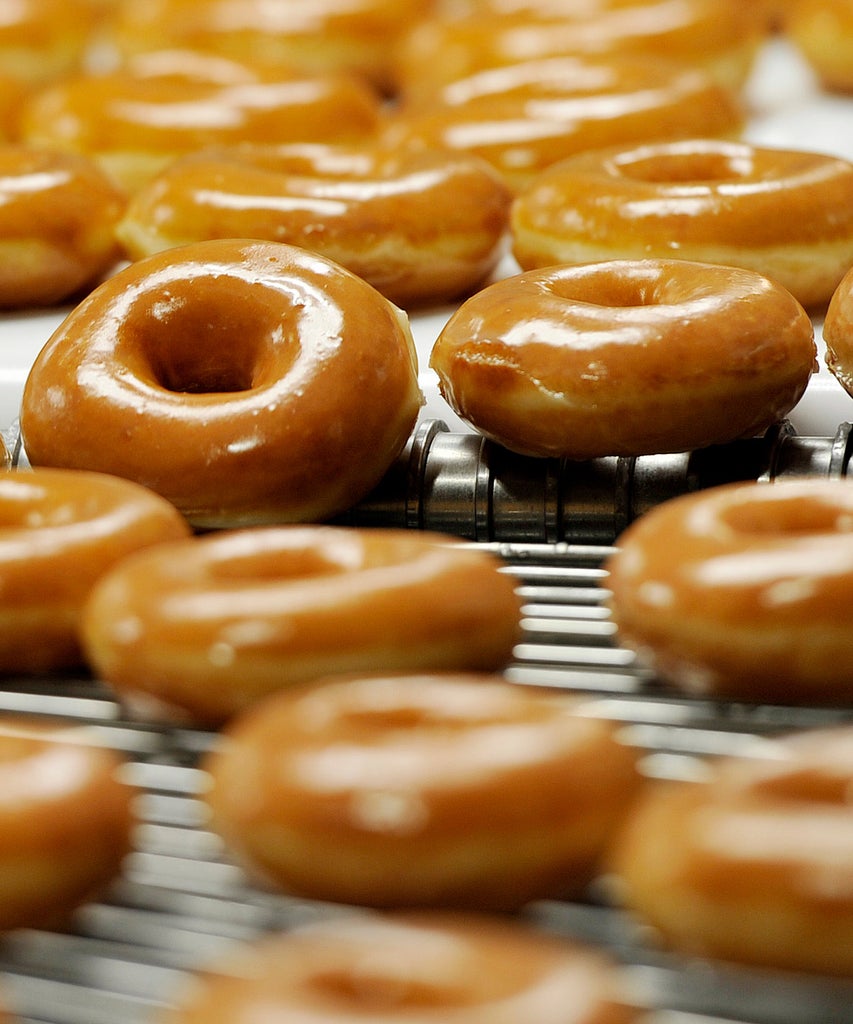
Although many of us can’t wait to get the COVID-19 vaccine, some people are still wary of side effects. Others distrust vaccines altogether. According to a recent NPR study, 49% of Republican men say they will not get vaccinated (fun!), citing distrust in the White House and scientists like Dr. Anthony Fauci. There are many reasons to get the shot, and on Monday, doughnut chain Krispy Kreme announced one more: From now until the end of the year, anyone who brings a vaccination card into one of its locations will get a free glazed donut.
“We all want to get COVID-19 behind us as fast as possible and we want to support everyone doing their part to make the country safe by getting vaccinated as soon as the vaccine is available to them,” wrote chief marketing officer Dave Skena in a statement. This isn’t a one-time offer, either: vaccinated Americans can score a donut a day at any U.S. location. The company will also incentivize employees to get the vaccine with four additional hours of paid time off.
Naturally, Twitter exploded with excitement and surprise — and then, jokes, which quickly turned into fatphobic digs. “Such irony,” wrote one user. “Krispy Kreme donuts were the comorbidity that made me eligible to get vaccinated in the first place!”
Even worse, some doctors criticized the initiative. “Krispy Kreme offering free doughnuts for getting vaccinated is like Marlboro offering free cigarettes for getting a flu shot,” Dr. Eugene Gu, MD wrote on Twitter. “We have an obesity epidemic in this country that is killing us. Corporations that ride the COVID-19 vaccine as a marketing ploy for junk food is terrible.”
Many of Gu’s followers took issue with his statement. Krispy Kreme’s plan is a marketing technique, yes, but it’s also a harmless one. It might encourage a few skeptics to try a little harder to find an open vaccine appointment, and it might drive some new customers to the chain. The ploy won’t end the pandemic or have a significant impact on anyone’s health. But are all the Twitter jokes and criticisms really about health, or are they just rooted in fatphobic outrage?
“Tens of thousands of lives depend on vaccine hesitant people getting vaccinated as quickly as possible so the US reaches herd immunity but yesterday a number of pundits were mad at Krispy Kreme for incentivizing people with donuts,” Aaron Rupar wrote on Twitter.
Since its onset last year, the COVID-19 pandemic has amplified fatphobia in America. Many experts took issue with the Centers for Disease Control and Prevention’s assertion that obesity worsens outcomes from the coronavirus. In an op-ed for Wired, dietician Christy Harrison acknowledged studies proving that individuals with higher BMI were also at a higher risk for COVID, but argued that they were short-sighted and didn’t take into account factors including healthcare discrimination. The reports, Harrison wrote, fail to “control for race, socioeconomic status, or quality of care — social determinants of health that we know explain the lion’s share of health disparities between groups of people.”
Then, we saw another wave of vitriol when fat people became eligible for the vaccine. “I’m annoyed obese people of all ages get priority vaccine access before all essential workers,” wrote Blake McCoy, a Fox 5 anchor in Washington, D.C., in a since-deleted tweet. “When most stayed home, we went to work everyday last March, April, May and everyday since putting ourselves & loved ones at risk.” He later apologized, after many people called him out for shaming and perpetuating attacks against fat people who choose to get the vaccine.
Krispy Kreme’s gimmick is just that: a gimmick. Even if the campaign is self-serving, it also encourages those who are eligible to protect themselves and others from the virus — and really, it’s never a bad thing to offer free food during a time of widespread economic instability and food insecurity. The real problem here is the odd, mass panic over the idea of a vaccinated person — especially one who happens to be fat — receiving a free Krispy Kreme donut.
Like what you see? How about some more R29 goodness, right here?
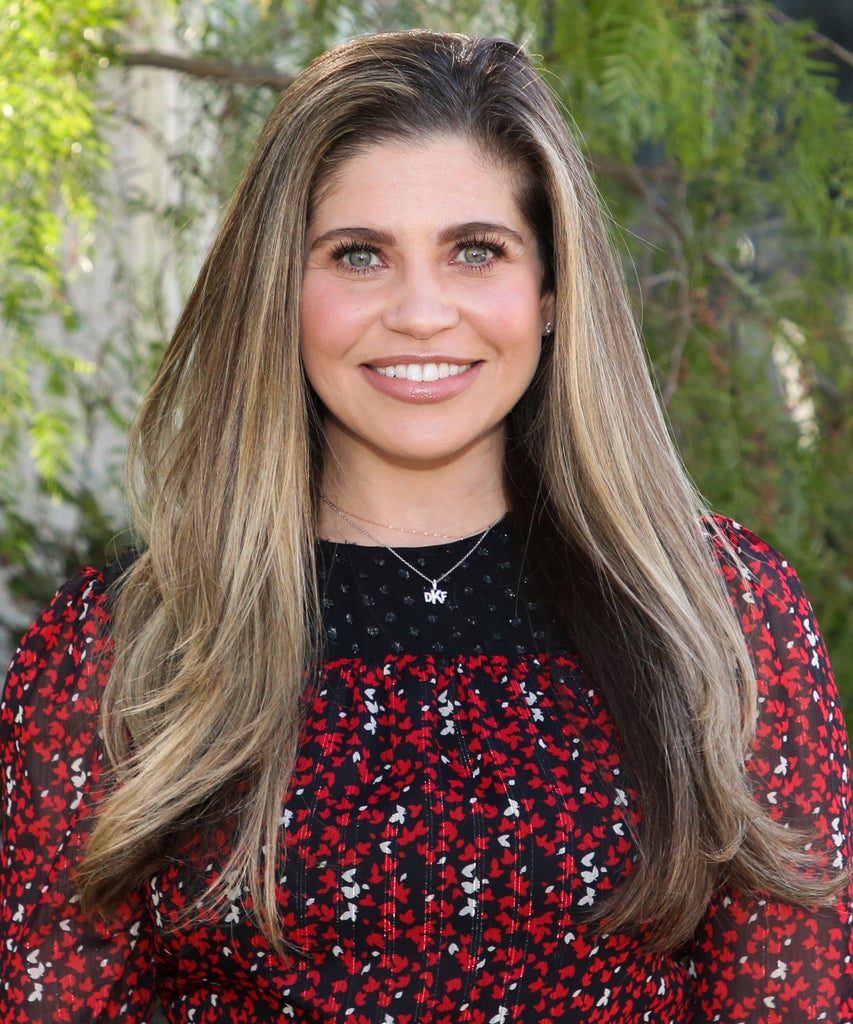
UNIVERSAL CITY, CALIFORNIA – JANUARY 28: Actress Danielle Fishel visits Hallmark Channel’s “Home & Family” at Universal Studios Hollywood on January 28, 2020 in Universal City, California. (Photo by Paul Archuleta/Getty Images)
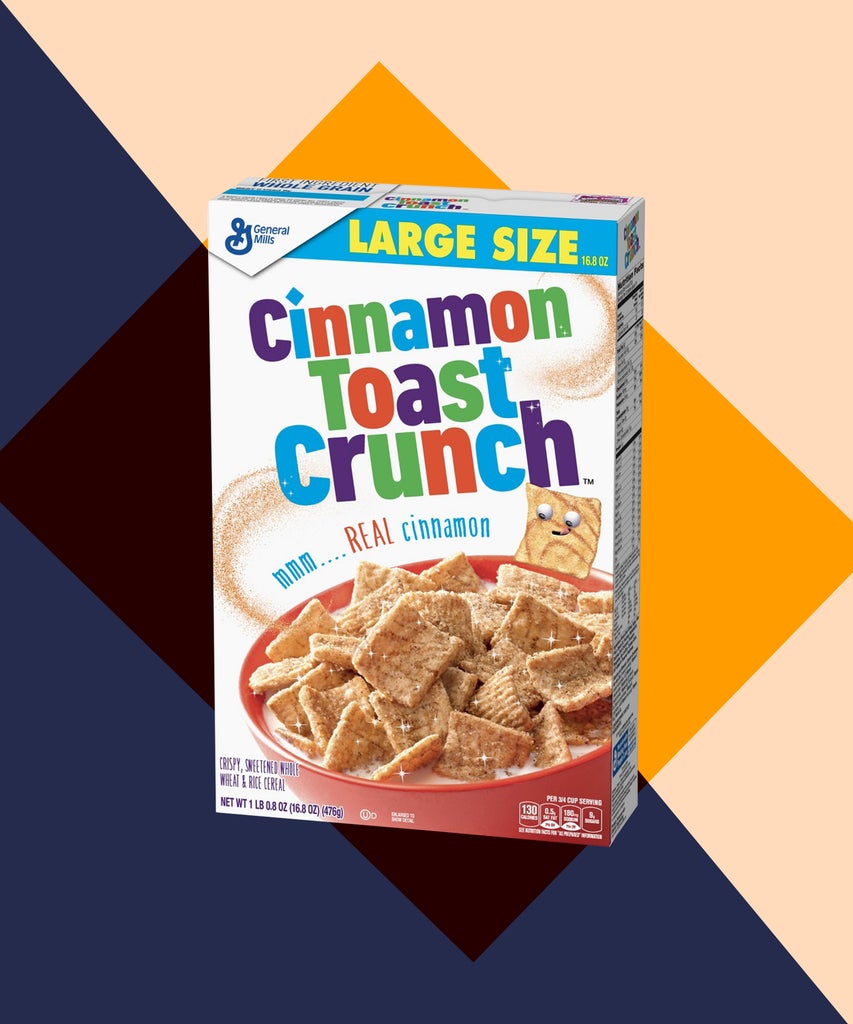
As kids, we all longed to find a surprise prize in our cereal boxes. But this is not what comedian and producer Jensen Karp had in mind when he pouring himself a bowl of Cinnamon Toast Crunch on Monday. Karp found what appeared to be shrimp tails covered in cinnamon-sugar coating mixed in with the cereal — yes, really. And shortly after sharing the saga on Twitter, people became enthralled in the mystery of Cinnamon Toast Crunch shrimp guy — but they could have never predicted what happened next.
After sending a form submission email to General Mills, the creators of Cinnamon Toast Crunch, Karp posted a picture of what he found on Twitter. The brand reached out through its own Twitter account telling him that it was probably not shrimp tails in his breakfast, but just “an accumulation of the cinnamon sugar.”
As the story continued to trend on Twitter, General Mills issued a public statement: “After further investigation with our team that closely examined the image, it appears to be an accumulation of the cinnamon sugar that sometimes can occur when ingredients aren’t thoroughly blended. We assure you that there’s no possibility of cross contamination with shrimp.”
But Karp was not convinced. In fact, he’s currently waiting on a carcinologist to test the pieces. Why? Because in that same box of Cinnamon Toast Crunch, Karp also found what appears to be dental floss as well as black marks baked into the cereal that he fears may be rat feces. According to the writer, he bought a two-pack of the cereal, and on the second bag of cereal, Karp noticed what appeared to be clear tape on the bottom, leading him to suspect that the boxes could have been tampered with.
You still with me? Because this is about to get even weirder. In a plot twist that we never saw coming, Twitter users were shocked to learn that Karp is no mere man on the internet: He is married to Danielle Fishel, also known as Topanga Lawrence from Boy Meets World, also known as every straight man on Hinge’s first celebrity crush. The pair were married in 2018 and have a son together. And it was perhaps this discovery that caused us to collectively lose our minds. Even Karp found the entire situation ripe for some 2021 bingo combination.
Obviously, Karp seems to have Topanga I mean Fishel’s full support in his quest to determine how something that looks very much like shrimp ended up in his cereal. “‘Accumulation of sugar particles.’ I am truly at a loss for words,” she tweeted.
In an email to The New York Times, General Mills representative Mike Siemienas explained that the company is still investigating the incident, but they are confident that “this did not occur at our facility.” While Karp and the company await the test results from the carcinologist, the internet is biding its time by developing shrimp-based dishes that incorporate a Cinnamon Toast Crunch coating. Even Karp admits they look delicious!
Like what you see? How about some more R29 goodness, right here?
Growing up, I ate at least one bowl of cereal every single day. Life Cereal was my favorite, though we also always had a few other boxes in the pantry: some version of Chex, Special K, Puffins (original flavor — the peanut butter and cinnamon flavors, I’ve always thought, have a strange texture), bite-sized Shredded Wheat (plain), Crispix. We weren’t allowed “sugary” cereal; Life was the sweetest type we had in the house. While my parents ate Cream of Wheat or eggs, I shoveled bowl after bowl of the cold, crunchy stuff into my mouth before shooting out the door to school.
But when I went to college, and gradually became an adult with a tepid concern for my health, I stopped eating it. Empty calories, I thought. Not good for you. Turns out, I was merely part of a larger trend: In the United States, consumption of cold cereal peaked in the ‘90s, and has steadily declined since, in large part due to health concerns about the product.
Until 2020.
Cereal purchases surged for much of last year before finally dipping at its end, making 2020 a reversal, in many ways, of the trends that led to cereal’s decline in the past two decades. Suddenly, all the people who dropped their morning rush to the office now have the time — and the apparent disinterest in a “healthy” breakfast — to sit down in the morning with a bowl of cereal, just like they did as kids. Can it last?
Cold cereal in the United States has a strange, fascinating history, studded with religious mania, mind control, food shot from guns, and the commercial realization that children have immense market power. But this history may be coming to an end. Fewer Americans are eating cereal every year, despite some of them offering a substantial amount of fiber, a critical nutrient in which 95 percent of Americans are deficient. Decades of marketing that focused on children, however, has convinced millions of Americans that cereal is merely a sugary treat, not a healthy breakfast option; it’s something to grow out of, not aspire to. It didn’t have to be this way.
The origin story of the breakfast behemoth, is actually a very adult one. The first cold cereal was introduced in 1863, when a religious conservative vegetarian and health spa (then called a “sanitarium”) proprietor named James Caleb Jackson created what he called “granula” made out of graham flour. The cereal was so hard it needed to be soaked overnight. John Harvey Kellogg, another religious vegetarian (specifically, a Seventh Day Adventist) and sanitarium owner, similarly introduced his own version of “granula,” which he named “granola” when Jackson threatened to sue. Unfortunately for Jackson, who’s been lost to mainstream history, it was granola — and Kellogg — that stuck.
Kellogg’s divine inspiration for granola derived from his concern about proper bowel movements and, most famously, his preoccupation with masturbation, which he believed caused a whole litany of health problems, including epilepsy, mood swings, and acne, among other ailments. The solution, he thought, was a well-balanced diet, devoid of heavy spices, flavors, and sugar; so, he developed granola and, with the help of his less religious brother, cornflakes. His brother Will, not being obsessed with masturbation and dietary purity, was convinced that adding sugar to their recipe would make it more popular. Though John disagreed, Will won the fight, wrenching the company from John and ultimately popularizing the lightly sweet cornflakes we’re familiar with today.
In the 1910s, the Quaker Oat Company touted their Puffed Wheat and Puffed Rice inventions as food science breakthroughs and “the eighth wonder of the world.” They were also, according to the company, the first “food shot from guns,” as the rice and wheat grains were puffed in a cannon-like cylinder that was heated from the outside.
Other forms of cereal would soon follow. The Ralston Purina company developed an early version of Wheat Chex for followers of Ralstonism, a strict — and racist — religious sect that believed in mind control. But it was Cheerios, originally called Cheeri-Oats, that was born at the exactly right time: 1941, right before America entered World War Two. As the war ended, men returned to America from overseas, while women, after spending several years in the workplace, were sent back to the kitchen. Cereal provided a way for tired, frustrated housewives to quickly and wholesomely feed their rapidly growing families before the kids headed to school and their husbands to work, and so cereal, which had been merely one of many breakfast options in the decades prior, soon became dominant.
“Families with children were becoming more time pressured. Therefore, there was a consumer need for a more convenient breakfast option that can be more quickly prepared than the traditional heartier eggs, bacon, et cetera breakfast,” says Jon Quinn, the Director for the Center of Brand Leadership at the Indiana University Kelley School of Business. “The rise of mass media advertising, like radio and television, drove demand” as well, he says.
It was around this time that Tony the Tiger would emerge as a mascot that directly targeted children with sugary Frosted Flakes. With Tony, this new form of youth advertising, which would compel children to request that their mothers buy them specific brands of sweet cereal, would catapult cereal into millions of American pantries. Breakfast cereal, which had originally been developed as a nutritious food that people ate at health spas, was transformed into the almost dessert-like product most of us think of today.
This strategy worked — until recently. In the 2000s, Americans were quickly latching on to the idea that low sugar, low carb diets were the secret to good health — or, at least, weight loss. This meant that the effort of decades of marketing, which had focused on getting kids hooked on sugary cereals, was backfiring: Raised on Frosted Flakes, Fruit Loops, and Cocoa Puffs, many Americans thought of cereal as sugary junk food, not as the nutritious, fiber-rich food its inventors had intended. “Look at millennials: they want health, nutrition, wellness,” says Diane Badame, an associate professor of clinical marketing at the University of Southern California Marshall School of Business. “They want fresh fruit. They want things that have higher levels of protein.” Despite efforts by some cereal companies in recent years to tout their whole grain, protein-rich options, many Americans aren’t buying it. When they think of cold cereal, they don’t think about high-fiber Shredded Wheat, which could be just as filling as an egg sandwich. They think about (and buy) Honey Nut Cheerios, Cinnamon Toast Crunch, and other cereals designed to appeal to kids, according to a December 2020 report from global market research firm Euromonitor.
Cereal’s perceived status as a nutrient-devoid sugar bomb, however, was only one of many nails in the coffin for the industry. Just as Americans had begun eating more cereal as they had more children in the post-WWII baby boom, and then again in the economically robust ‘80s; once the birth rate went down, cereal consumption also saw a drop. Eighteen percent of Americans don’t even eat breakfast, and those of us who do will often grab something on-the-go, such as a protein bar or fast food. Cereal isn’t very portable, which has contributed to its diminishing popularity: You can’t exactly eat a bowl of cereal as you drive to work. “As Americans spent a greater portion of their time working and commuting for work, a growing portion of them wanted something they can eat when they’re on-the-go — if they ate anything for breakfast at all,” Quinn says. “It is somewhat ironic that the trend that led to the category’s initial growth also contributed to its decline.”
2020 changed all that. For a short time, at least.
Last year, there was a 20.9% surge in hot and cold cereal, according to Badame. Part of the reason, she says, is that people aren’t relying on the drive-thru breakfasts they’re used to eating on their harried commutes to their jobs. “People are staying home,” she says. “They’re not doing food service. They’re not going to McDonald’s getting a Big Mac or a McMuffin on the way to work.”
Americans have more time to sit down and eat breakfast, but we’re also stressed out, and don’t necessarily want to cook. Instead, we want something easy that still feels like comfort food, which many people consider cereal to be.
“When confronted with a threat to our lifestyle and what we hold dear, our normal reaction is to retreat into what gives us comfort and reminds of a simpler time and/or of our childhood,” says Quinn. “Cereal fits this psychological need perfectly. Any sort of health concerns take a backseat until the threat is mitigated or removed.”
Those threats, though, are being mitigated and removed, if gradually. As 2020 progressed, the economy slowly opened up, and people either returned to work or at least acclimated emotionally to their new reality; people stopped buying cereal in large quantities, according to Quinn. Some of cereal’s market “stickiness” will remain if people continue to work from home, he says. But the need for nostalgia and comfort has largely faded, which explains some of that end of 2020 dip. This decline is likely to continue further, with Euromonitor predicting that U.S. sales of cold cereal will drop more than eleven percent by 2025.
It’s unfortunate for cereal’s market longevity that the industry focused on its sweet and junky products. Kids eventually become adults, and usually move past the things they’d treasured when they were young (except in times of crisis and stress, as 2020 shows). Advertising to an audience that will age- out limits the reach of that product, particularly when the now-adults aren’t having kids at the same rate their parents did.
People also, quite simply, aren’t consuming ads in the same way they used to. Television, which played a crucial role in marketing cereal to a young audience, has pivoted to streaming, where there are often far fewer ads. People under 40 “are not watching TV anymore. They’re going to Netflix, they’re streaming. And so they’re not seeing the commercials that we used to see,” says Badame. Millennials and kids are either streaming or online; if cereal marketers want to reach these young audiences, says Badame, “they’ve got to promote their products online. Because that’s where everybody is.” Influencer partnerships, including with micro-influencers, could be a great start, she says.
We could also benefit our health if we ate more cereal — certain cereals, anyway.
Most adult Americans still struggle to eat a balanced diet, which is understandable: Worked to the bone, we’re tired when we get home from the office or a long shift (or two), and shopping for and cooking a delicious, healthy meal takes energy many people have already spent, to say nothing of having the time to develop cooking skills. Cereal could be an answer to this cooking fatigue, but it will take some reprogramming of how we think about food to really lean into it.
But, it might be possible. I love to cook, but I have a digestive disorder that makes me sensitive to a lot of healthy, fibrous fruits and veggies (I still eat and delight in them, but they sometimes give me stomach aches). Only once I came back around to cereal did I realize I could easily and gently reintroduce regular fiber (pun not intended) into my diet. Now, I eat extremely fiber-rich Shredded Wheat, Wheat Chex, and Puffins several times a week; I’m cheaply and easily tackling the issue of getting enough fiber in my diet, something 95% of Americans could also stand to do more of.
Turns out, the original Kellogg was right about at least one thing: Cereal, at least some cereal, is good for your gut. Though the 200-year-old invention will almost certainly never disappear, the gains of 2020 are projected to slow and slide back into the downward spiral the industry had experienced over the past decade. This isn’t the worst thing, since few people should eat quite as much Chocolate Cheerios and Lucky Charms as everyone did in the ‘90s. But I’ll be sorry to see the industry go, especially if my beloved bite-sized Shredded Wheat continues to get harder to find.
Like what you see? How about some more R29 goodness, right here?